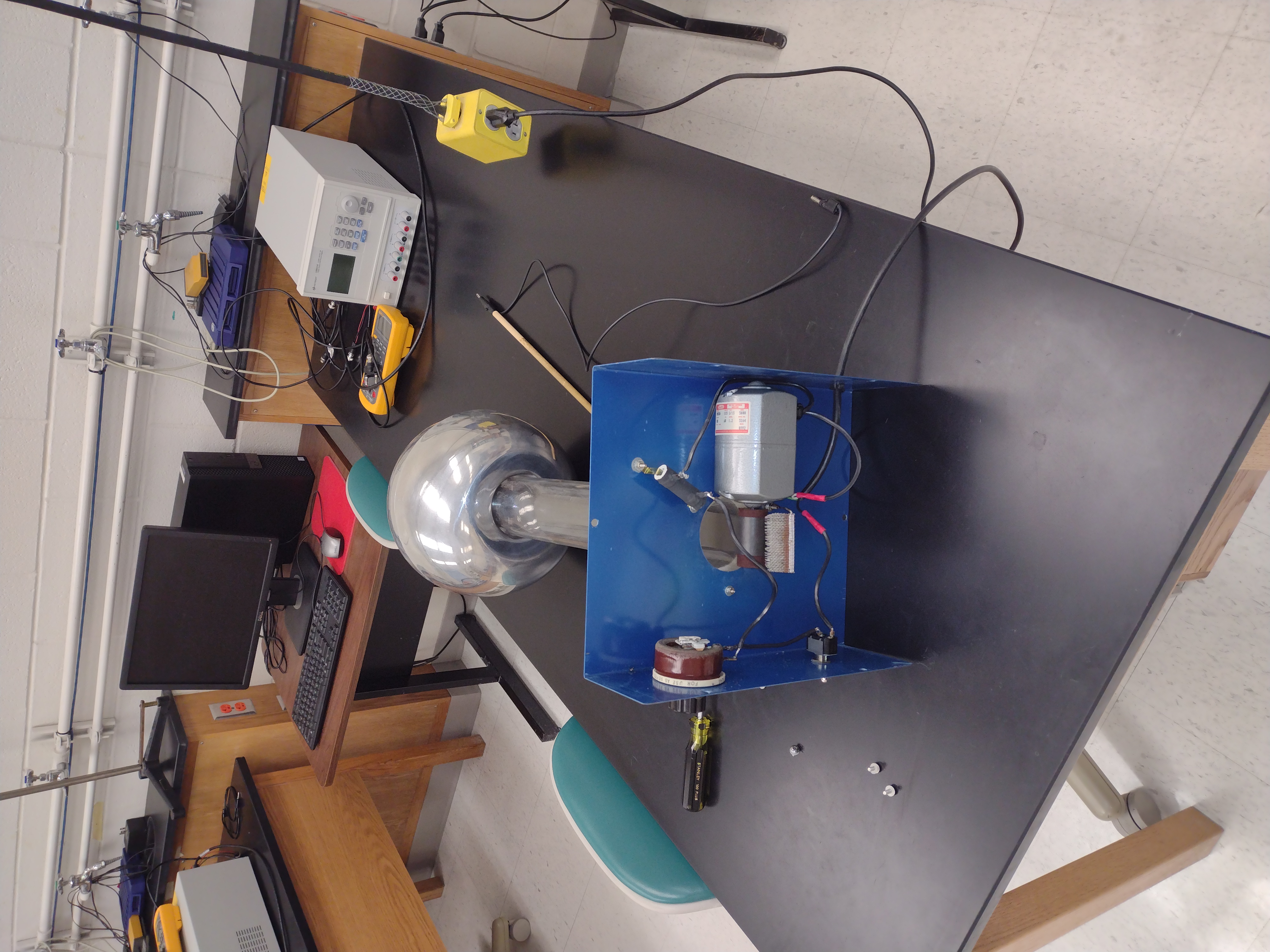
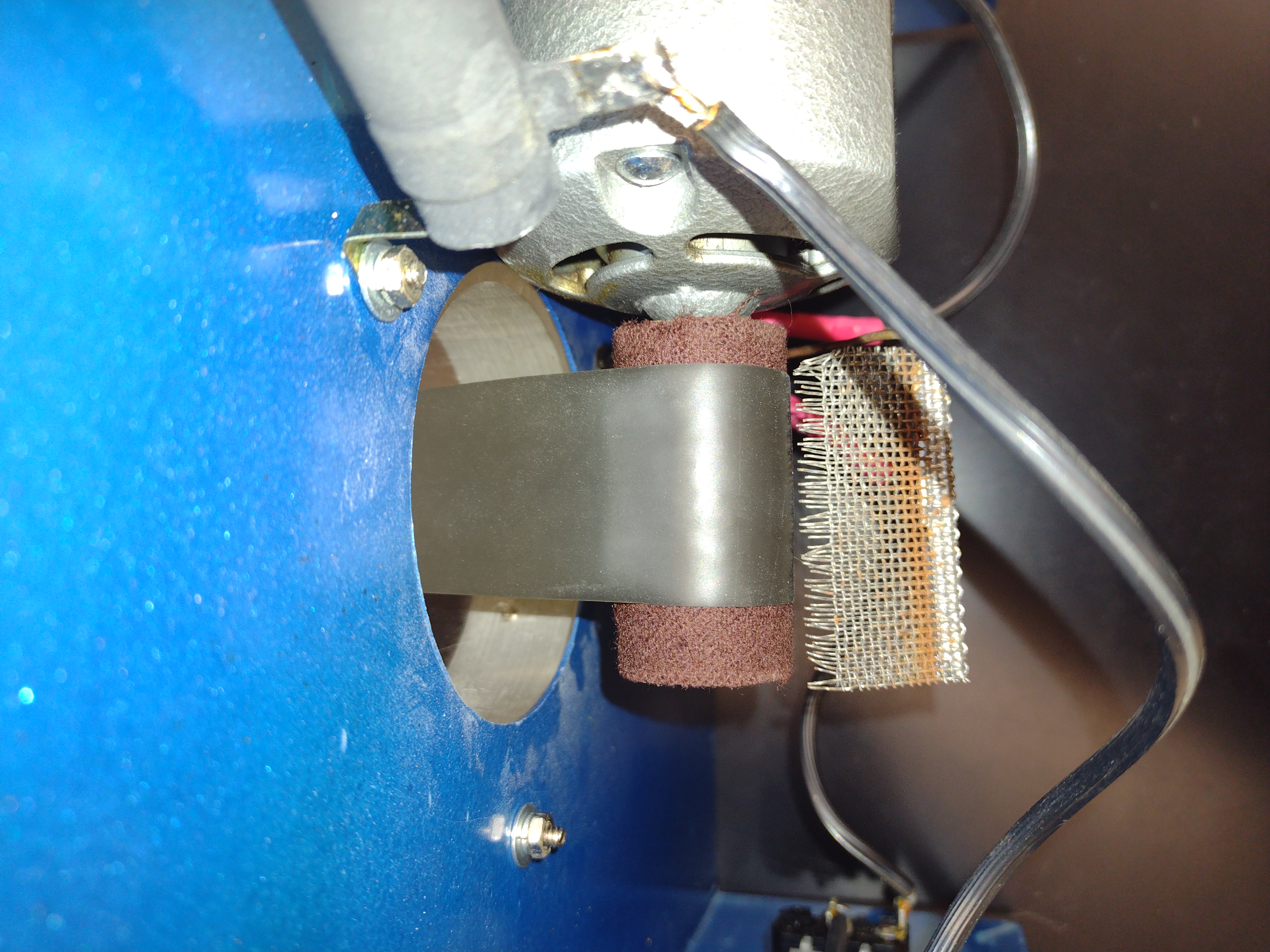
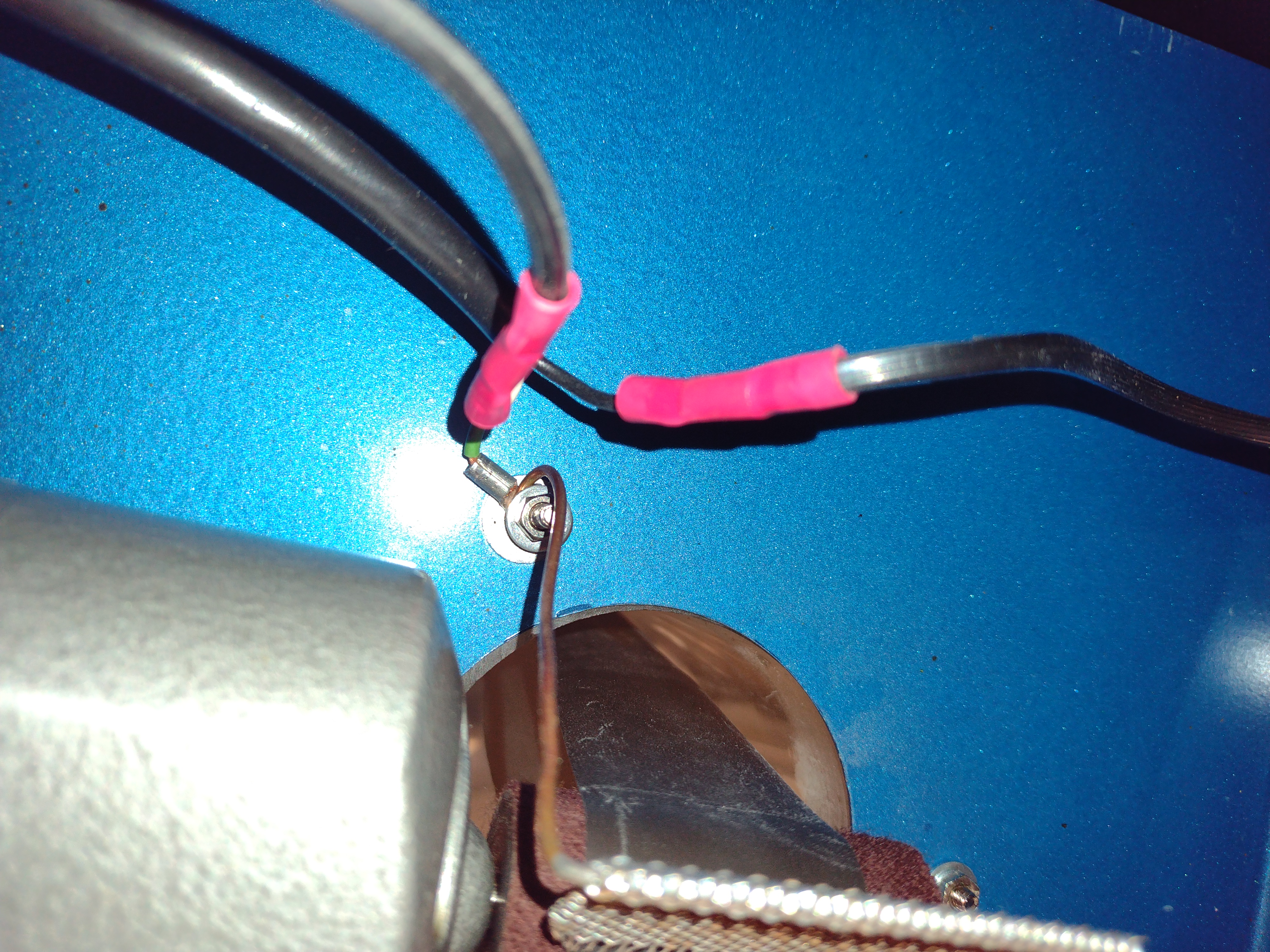
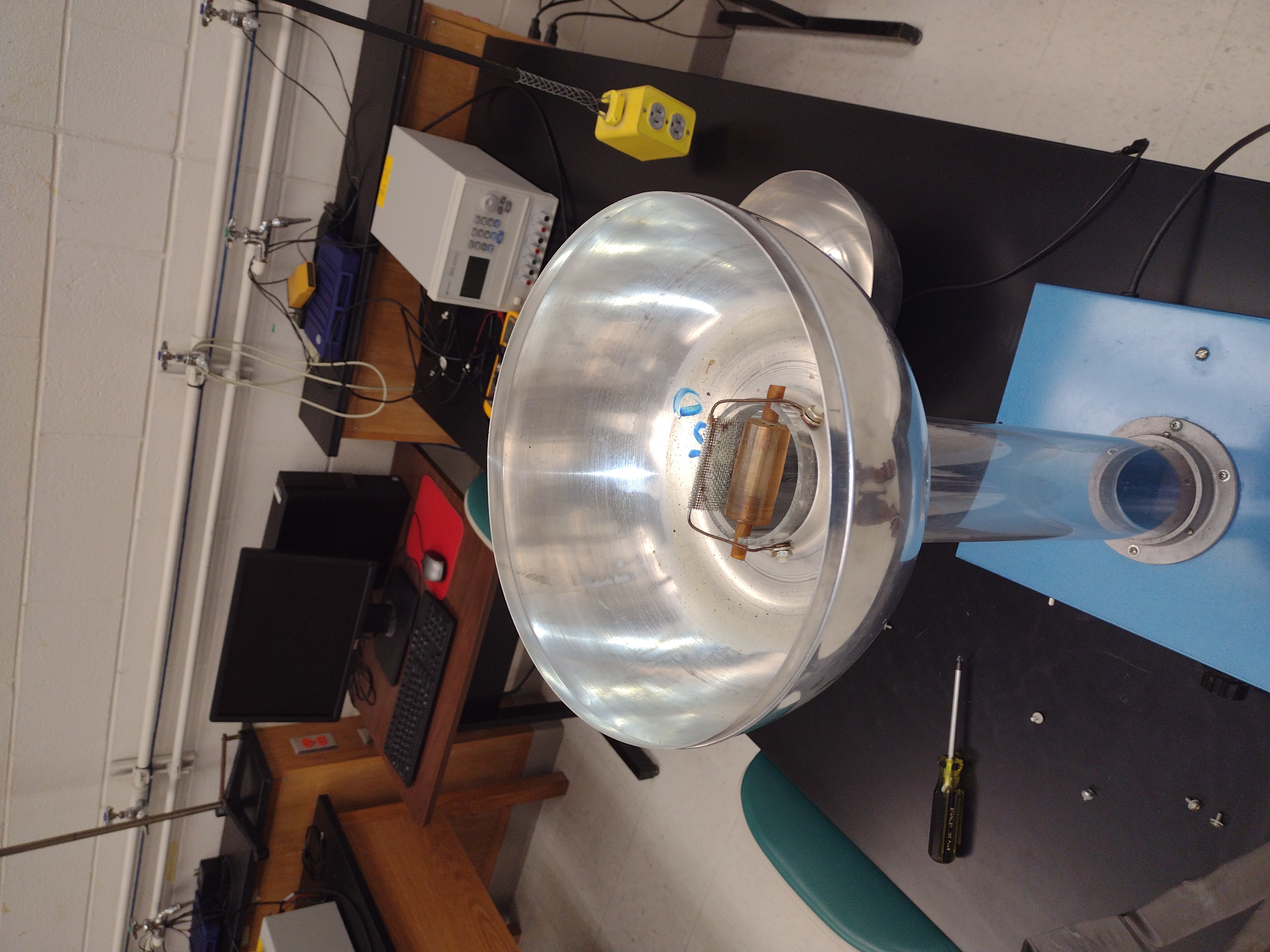
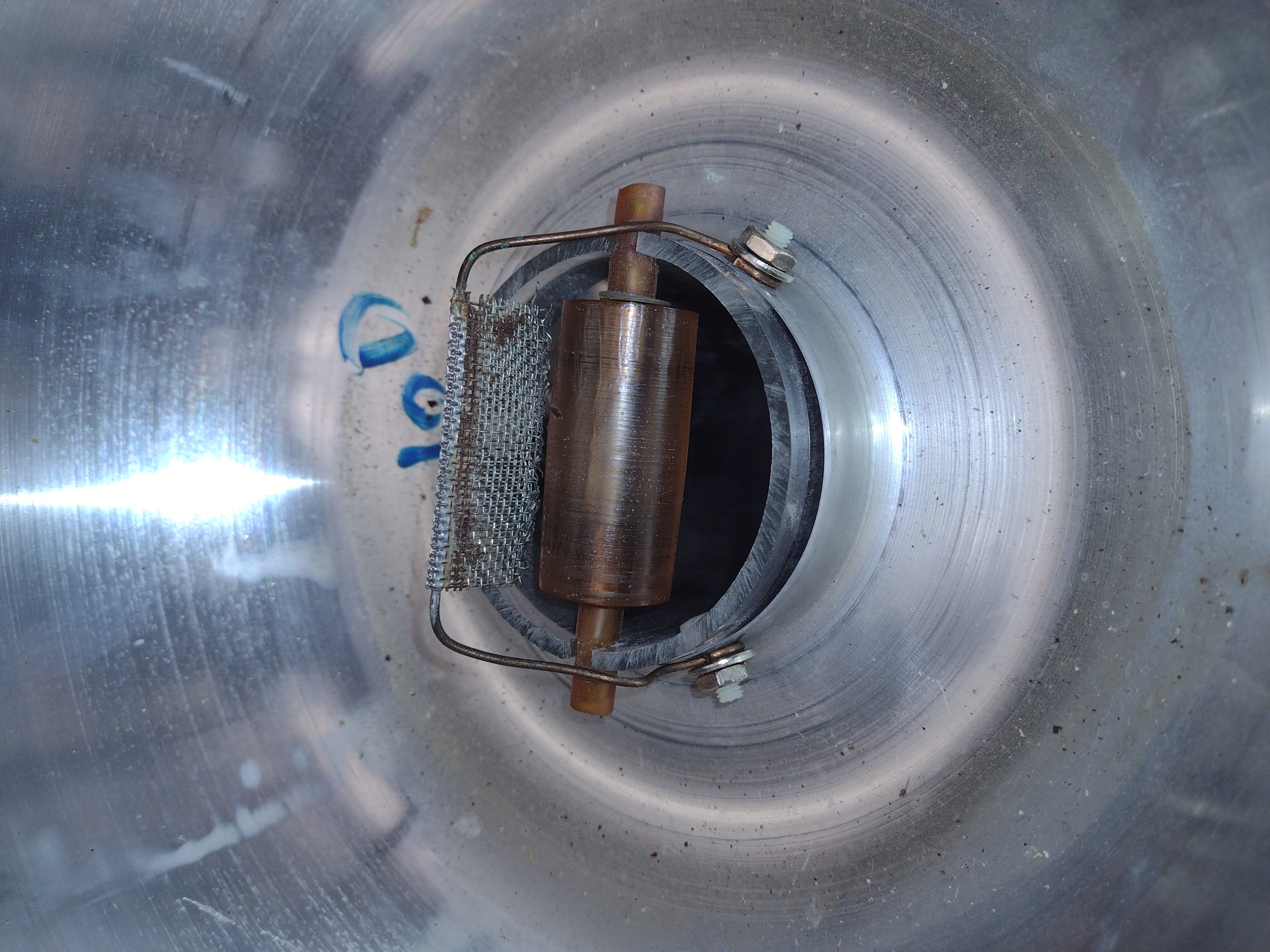
Demo: Van de Graaff Generator
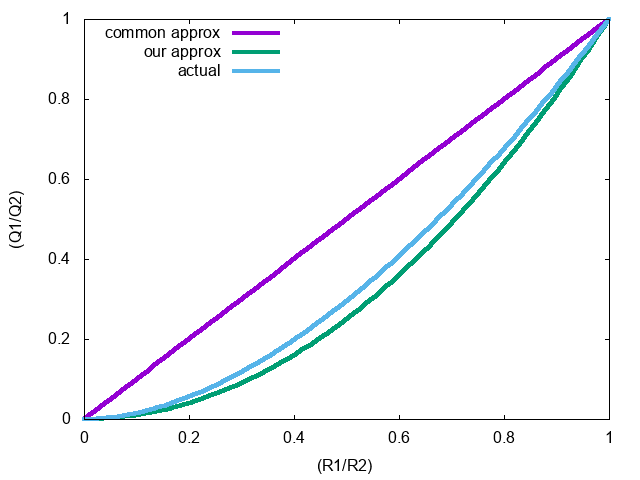
Actual \[ \frac{Q_1}{Q_2} = \left(\frac{R_1}{R_2}\right)^2 \left(\frac{\pi^2}{6} \right)^{(R_2-R_1)/(R_1+R_2)} \]
Our Approximation \[ \frac{Q_1}{Q_2} = \frac{R_1^2}{R_2^2} = \left( \frac{R_1}{R_2} \right)^2 \]
Common Approximation \[ \frac{Q_1}{Q_2} = \frac{R_1}{R_2} \]
1663 - electrostatic generator by Otto von Guericke
1785 - Coulomb’s Law confirmed
1803 - Atomic theory - John Dalton
1897 - Electron discovered - J.J. Thomson
1904 - Plum pudding model of atom - J.J. Thomson
1911 - Atomic nucleus discovered - Ernest Rutherford
1913 - Bohr model of the atom
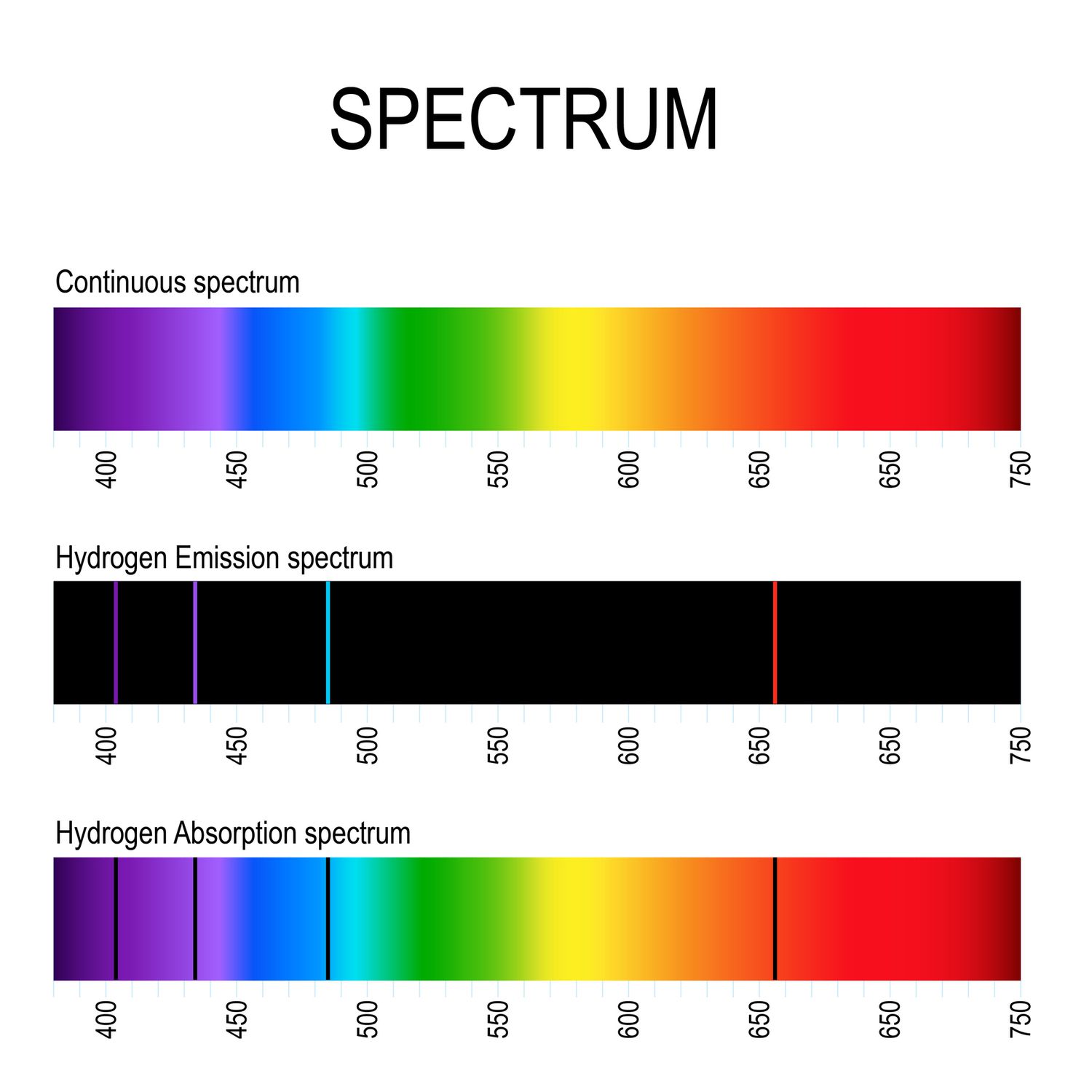
If an atom is a positively charged nucleus surrounded by negatively charged electrons, perhaps the electrons just orbit around the nucleus like a planet around the Sun…
How fast would the electron be traveling in such an orbit?
What would the acceleration be?
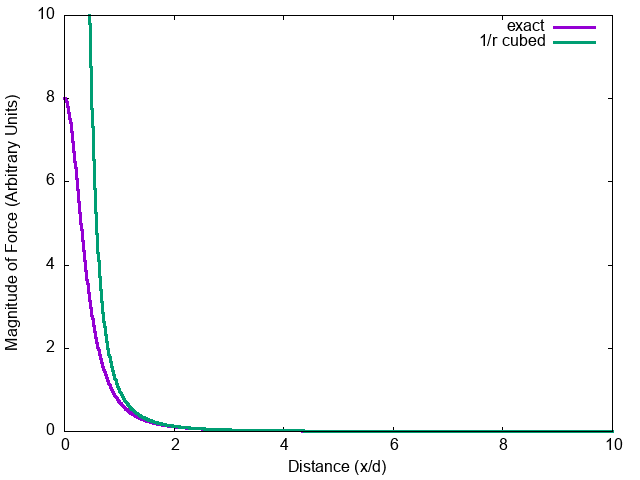
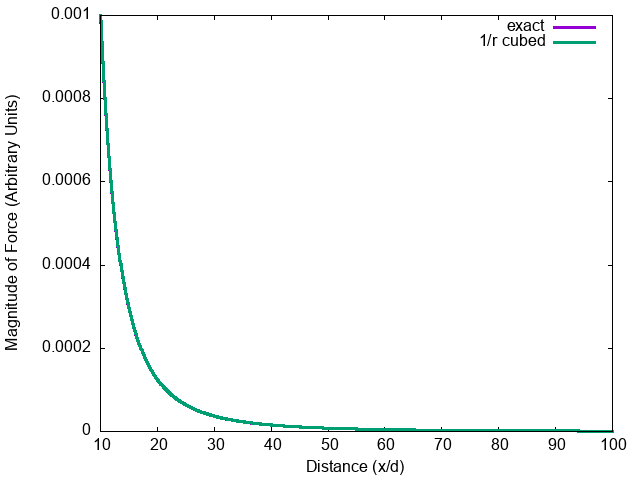
Force on a dipole by a dipole.
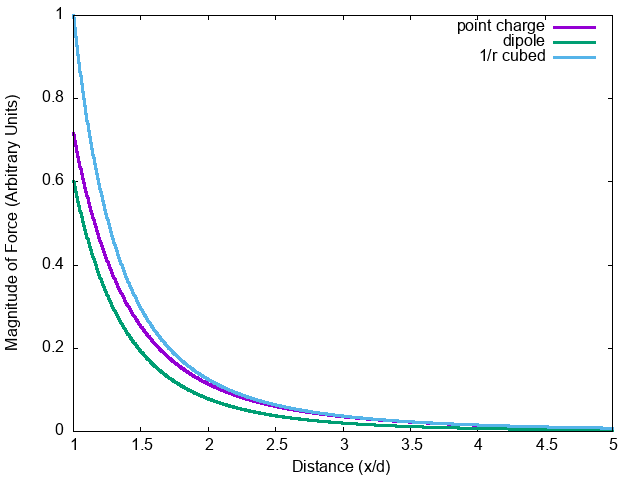
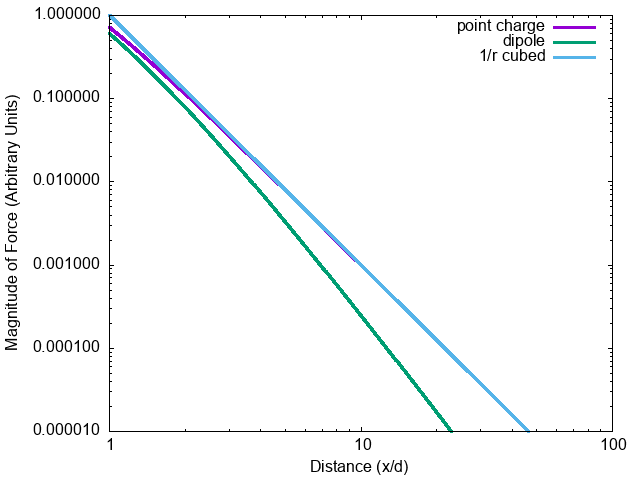
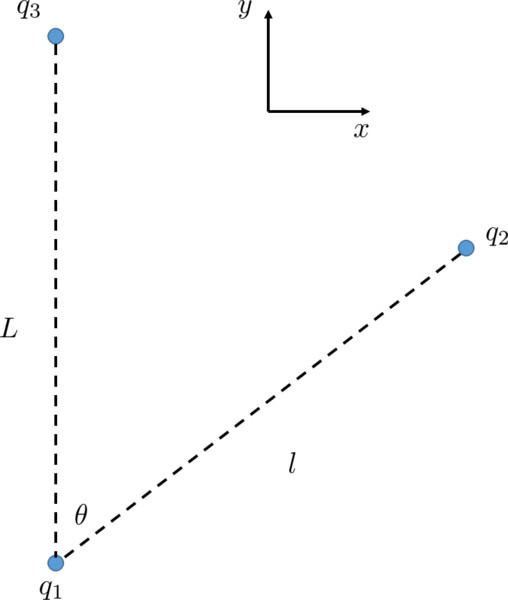
What is the net force on \(q_1\)?
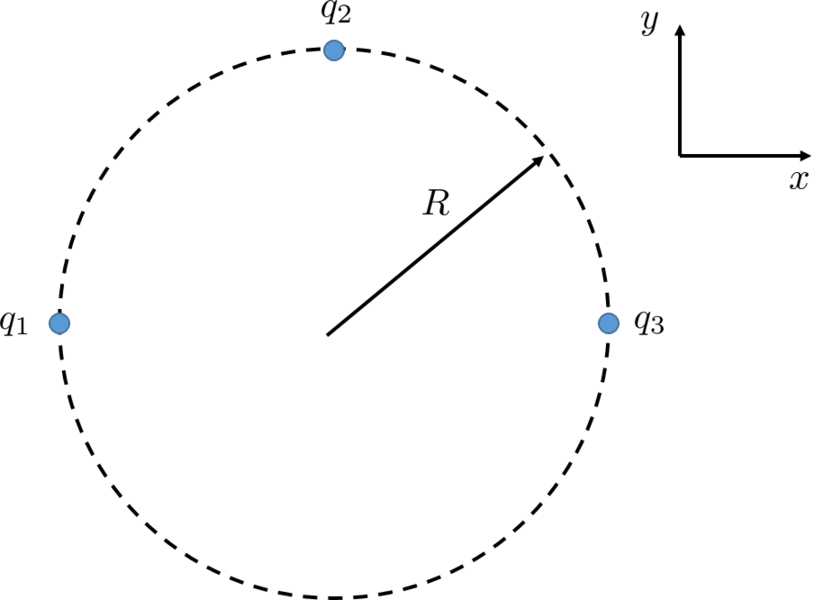
What is the net force on \(q_1\)?